
A specification is not a shopping list; it is a list of criteria. A good one says what is wanted, not whom it is wanted from. The headings below are drawn from ESTRON's technical summary table; the values can be copied into a specification as they are.
1. Valve controller
The unit must fit the existing solenoid valve; pipes, sprinklers and valves must not change. Ask for DC latching solenoid compatibility, operation on 2 × 9 V batteries, and 1 or 2 solenoid outputs. The schedule must stay in the unit's internal memory; irrigation must not stop if the connection drops. Write IP67 protection, password protection and a pulse input for a flow sensor.
Sample clause: "The controller shall fit the existing DC latching solenoid valves, run on batteries and require no mains supply or cabling." Details: controller specifications.
2. Communication: an open standard
Ask for Bluetooth access from a phone on site and LoRaWAN remote access from the office. LoRaWAN is an open standard; other devices can join the same network. Asking for a closed protocol ties the authority to one vendor. Range is up to 2 km in the city and 10 km in open terrain. An NB-IoT option can be written separately.
Sample clause: "Communication shall use the open LoRaWAN standard; the network server and gateway shall work with devices from other manufacturers." Details: LoRaWAN open standard.
3. Gateway
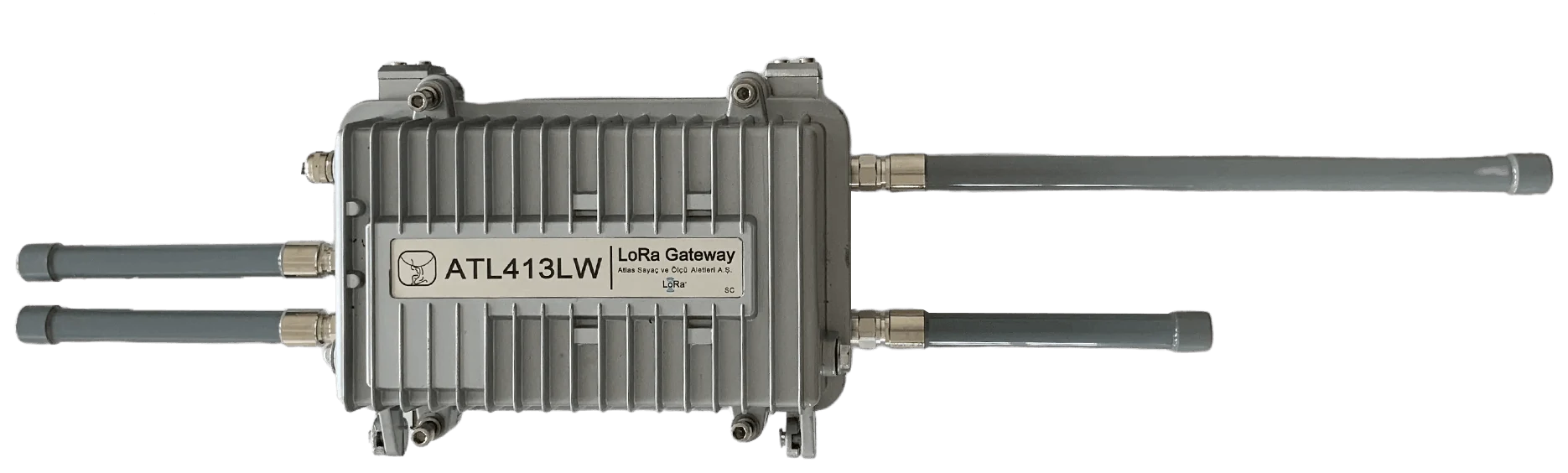
The gateway links the units on site to the cloud. Write capacity for up to 25,000 devices, 4G, Wi-Fi or Ethernet (PoE) backhaul, LoRaWAN Class A/B, 8 channels, an IP67 die-cast aluminium housing and a solar panel option. The number of gateways is set by the site survey; the specification asks for coverage, not a count.
Sample clause: "The contractor shall demonstrate by a coverage test that every valve box on site is covered." Components: system components.
4. Software
Ask for a web panel and a mobile app (iOS 14 and later, Android 7 and later). Write a map view, bulk schedule sending, a company → area → water line hierarchy and role-based permissions. Add reports with Excel export, alarms by mobile push, e-mail and SMS, and 7 languages. Hosting on the authority's own server and SCADA integration are written as options.
Sample clause: "On request, the software shall be hosted on the authority's server and shall exchange data with the existing SCADA system." Details: SCADA and on-premise integration.
5. Decision engine
The irrigation decision must be made every day, separately for each line. Inputs: satellite data (Sentinel-2, MODIS), the weather forecast, water demand calculated with FAO-56, irrigation history and user rules. Every decision must be logged with its reason; manual mode must always be available.
Sample clause: "The system shall produce a daily decision for each irrigation line and shall record the reason for the decision." The logic: AI irrigation.
6. Sensors
Rain, soil moisture, flow, pressure and temperature sensors must be supported. Frost and wind limits are defined in software. A flow sensor is asked for leak detection; which lines get one is decided at the survey.
7. Regulatory compliance
Türkiye's xeriscape decree and the Water Efficiency Regulation ask irrigation to be measured and recorded. The specification asks for water use to be metered and reported per line. For the mapping of headings: what the xeriscape decree asks of park irrigation.
8. Installation and acceptance
The existing infrastructure is kept; no digging or cable ducts are asked for. A pilot phase can come first; the same gateway and panel serve the later phases. At acceptance a coverage test is run, every line is opened from the panel and its sprinklers checked, and staff are trained.
Sample clause: "Acceptance shall consist of opening and closing every line remotely and viewing the decisions in the panel." Phasing: public procurement and specifications.
9. Local manufacture
Locally made hardware and software can be asked for. ESTRON is made in Türkiye; hardware and software are developed locally.
Common mistakes
| Mistake | Result | Better |
|---|---|---|
| Requiring cabling | Digging, cabinets and an electricity supply | Ask for a battery-powered wireless unit |
| Naming a brand | Less competition | Write criteria |
| Asking for a closed protocol | Dependence on one vendor | The open LoRaWAN standard |
| Fixing battery life as a number | An unmeasurable requirement | Battery life tied to reporting frequency, plus a low-battery alarm |
| Writing a gateway count | Too little or too much coverage | Ask for a coverage test |
Frequently asked
Where do I get the technical values?
From the table on the for municipalities page. The values can be copied into a specification as they are.
Can a pilot phase be written into the specification?
Yes. One park or one boulevard is taken as the pilot. The same gateway and panel serve the later phases; nothing bought at the start is thrown away.
Will the existing valves be replaced?
No. The unit fits the existing solenoid valve. The coil type is checked at the survey; the criteria are a DC latching coil, a two-wire connection and room in the box. Other questions are on the FAQ page; for your draft specification, write to us.